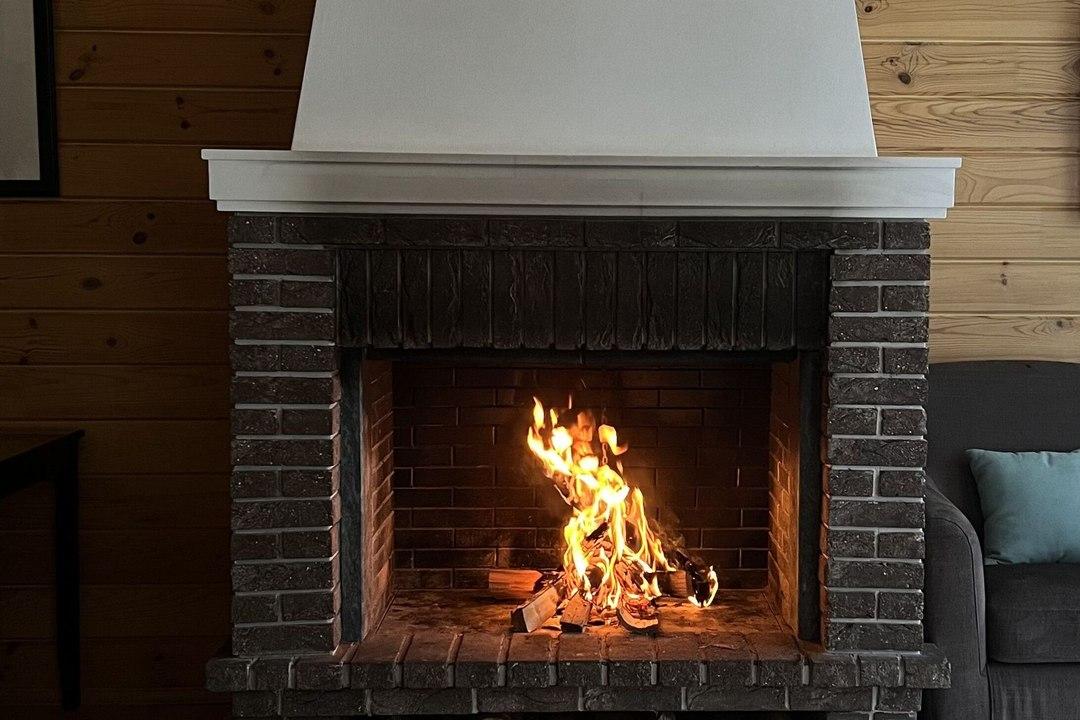
The back wall of the fireplace is cracking
You pull the grate out to clean up after the last fire of the season and see it: a crack running up the back wall, maybe two. Perhaps a firebrick near the floor wobbles when you touch it. Perhaps the panels in a factory-built unit have split and you can see bare metal behind them. Owners across Riverside find this every spring, and the question that follows is always the same. Do we fix it, or do we stop burning wood and put a gas unit in there?
Both are real options, and neither is right for every house. Radcliffe Chimney Services does both, so we have no reason to push one. This post sets out what each choice involves, what it costs with us, and the signs that tip the decision one way or the other.
Why the crack matters at all
The walls of the firebox are the only thing between a wood fire and the framing of your house. Fire brick and refractory panels are made to take that heat. When they crack, the heat finds a shorter path to the wood behind, and embers can settle into the gaps. A hairline crack in the face of a brick is often harmless. An open joint, a missing piece or a panel split through is not.
So the first job, before anyone talks about inserts, is to look at how bad the damage really is. That means a close look at the firebox with a light, and on most older chimneys a look up past the damper into the smoke chamber, where cracks are common and hard to see from the room.
The repair route
On a masonry fireplace, repair means cutting out failed joints and refilling them with a mortar made for fire, replacing broken firebrick, and sometimes relaying the whole back wall when it has bowed forward. On a factory-built fireplace, it means fitting new panels made for that unit, if they are still available.
| Damage we find | Usual repair |
|---|---|
| Open joints between firebrick | Joints cut out and refilled with refractory mortar |
| A few broken or loose bricks | Those bricks taken out and replaced |
| The back wall bowed or badly cracked | Back wall relaid |
| Split panels in a metal fireplace | New panels for that model, where made |
| Damper plate rusted or stuck | Damper repaired or a new one fitted at the top of the flue |
Firebox repair is measured on site and the figure is written down before work starts, because how much brick comes out is only clear once we are kneeling in front of it. Repair keeps the fireplace you have, keeps the wood fire, and usually costs less than an insert.
The insert route
An insert is a closed firebox that slides into the opening you already have, with its own vent running to the top of the chimney. With us, a gas insert costs $2,900 to $5,800 fitted. The spread comes mostly from the unit you choose and from the length and route of the vent.
The insert holds its own fire, so it does not lean on the old firebox walls the way a wood fire does. The opening still has to be solid enough to carry the unit, and the chimney has to be clear enough for the vent to pass. If the smoke chamber is badly broken or the flue is blocked, some repair comes first anyway.
Gas also changes how the fireplace is used. There is no wood to buy or store, no ash to clear, and you light it with a switch or a remote. Riverside sits inside the South Coast air district, which can call days when burning wood is not allowed in winter. Those rules are aimed at wood, so a gas unit can be used on days when an open wood fire cannot.
Weighing the two
| Question | Points toward repair | Points toward an insert |
|---|---|---|
| How often do you burn? | Several fires a season and you like wood | Rarely, or you want heat at the flick of a switch |
| How bad is the firebox? | Joints and a few bricks | The back wall, the floor and the smoke chamber all need work |
| Is it a factory-built unit? | Panels for it are still made | Panels are no longer available |
| Budget now | Want the smaller bill | Willing to spend once for years of easy use |
| Does the room get cold? | Not a concern | An open fireplace pulls warm air up the flue; a sealed unit stops that |
Most owners know which column they are in after reading that table. If you are in between, the state of the firebox usually settles it: when the repair list grows long, the insert starts to look like better value.
Once you have a feel for which way you lean, the next step is a look at your firebox. Use the form at the top of this page to tell us how often you burn, what the cracks look like from the room and whether gas is something you would consider. We come out, look at the firebox and the flue above it, and write down the cost of each route side by side.
The sweep and the camera
A firebox that has been burning wood for years is usually coated in soot, and soot hides cracks. When we cannot see the surface, we sweep first; a sweep is from $435. If there are signs of damage higher up, such as tile fragments on the smoke shelf or smoke leaking where it should not, a camera visit up the full flue is $405 and tells us whether the chimney can take a vent or needs work before either route.
We do not make that call for you in advance. If the light and a look up the throat answer the question, you do not pay for the camera.
What waiting does
A cracked firebox gets worse each time it heats and cools. Joints that are open this year let heat into the brick behind them next year. A loose brick at the floor falls out sooner or later, and an ember settles into the hole. Damage that is a short repair today can become a rebuilt back wall after a couple more winters of fires.
If the cracks look open, stop burning until someone has looked. Running the fireplace on gas logs does not solve it either, since the logs sit in the same damaged box.
Owners outside Riverside
The same choice comes up in Tustin, Brea and Diamond Bar, and we price it the same way. Houses there tend to have a mix of brick fireplaces and factory-built units, and the factory-built ones are where panels are most often hard to find.
For the wider picture of what chimney and fireplace faults cost with us, see Riverside Chimney Repair Costs, or read more on fireplace repair and inserts.
Get both routes priced
Send us a short note through the contact page about the cracks and how you use the fireplace, and we will look at it and put both options in writing so you can choose.
Recognize This at Home?
Radcliffe follows the sign to the part behind it, whether crown, roof seam, damper or firebox, and seals that before mending anything else. We cover Riverside, Tustin, Brea, Diamond Bar and the cities around them.